
On February 2, CaoCao announced that its Robotaxi 2.0 fleet has been equipped with Geespace satellite IoT communication technology and terminal products, and will soon introduce an SOS function based on a low-Earth-orbit satellite network. This move will enhance the Company's "space-air-ground" integrated safety assurance system and improve the safety and reliability of autonomous mobility services.
Last October, at the 2025 World Intelligent Connected Vehicles Conference, CaoCao announced that its Robotaxi 1.0 fleet had become the first in the world to achieve real-time connectivity between vehicles and satellite networks in Robotaxi operations, making the Company the first mobility platform in the world to apply low-Earth-orbit satellite communications in Robotaxi operations. Building on this leading foundation, CaoCao has further expanded the application of satellite communications in vehicle connectivity and data transmission during the Robotaxi 2.0 phase.
Leveraging its deep cooperation with Geespace, CaoCao's Robotaxi will introduce a dedicated "Satellite SOS" function as an upgrade and backup to the existing in-vehicle SOS emergency call function. Even when vehicles are in areas with unstable or interrupted 4G/5G signals, passengers can connect to the CaoCao Zhixing RAS Remote Safety Service Platform via the low-Earth-orbit satellite link, further enhancing the safety redundancy of CaoCao's Robotaxi services in extreme situations.
As the most important commercialization platform for Geely Holding Group's Robotaxi operations, CaoCao has deeply integrated space-grade satellite communication technology into shared mobility scenarios, setting a new benchmark for the autonomous mobility industry in exploring "space-air-ground" integrated network applications and building reliable operating systems.
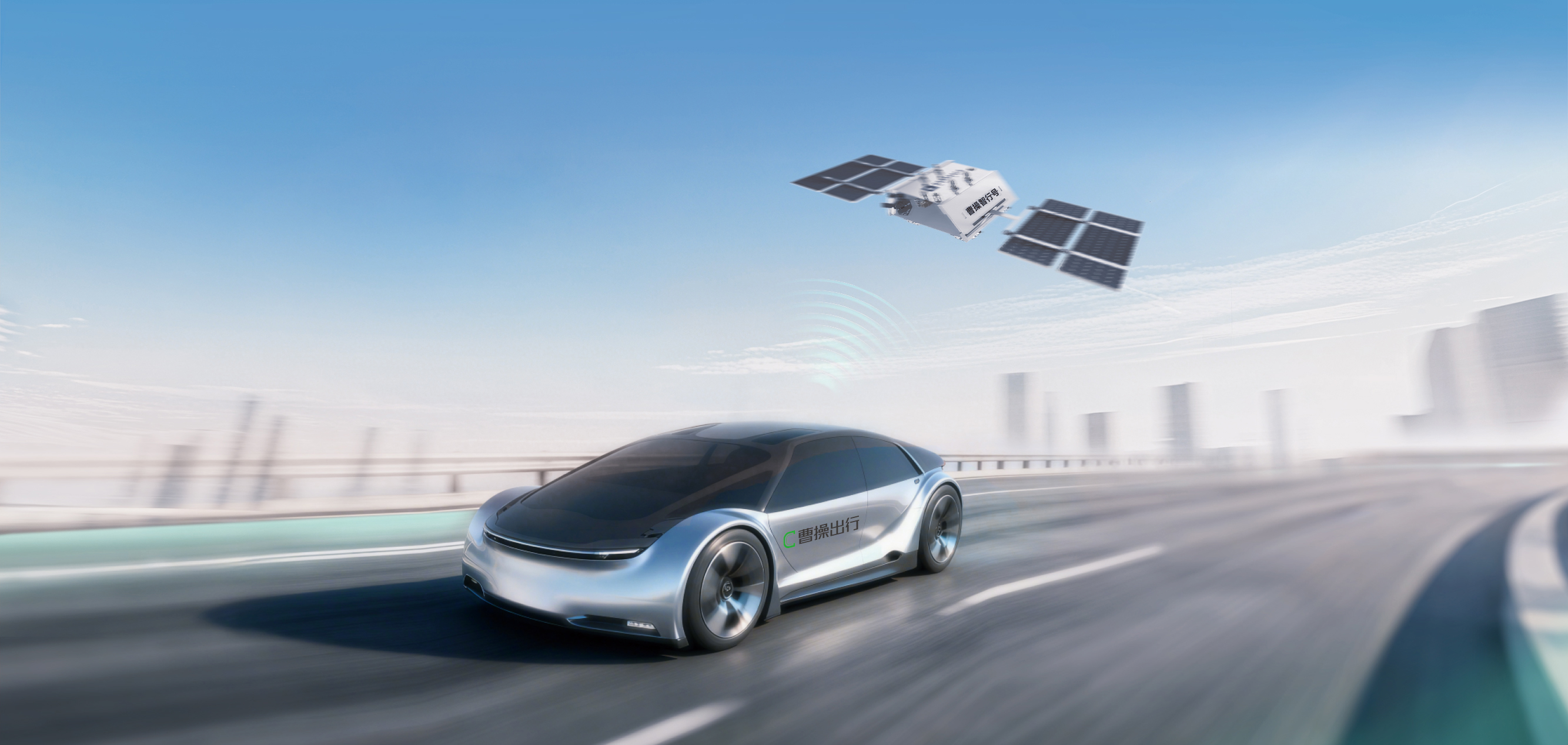
Currently, CaoCao's second-generation Robotaxi has begun pilot operations. The Company is about to launch the CaoCao Zhixing RAS Remote Safety Service Platform and will fully apply an intelligent asset management system, further integrating its operational advantages with intelligent cockpits and intelligent driving technologies. In the Robotaxi 2.0 phase, the Company will gradually achieve a smooth transition from operations with a safety driver behind the wheel to driverless operations, and explore mixed-operation models with both human-driven and driverless vehicles.
At the same time, CaoCao is working with Geely and related partners to develop a fully customized Robotaxi purpose-built model pre-installed with exclusive autonomous driving components and applications. The model will be unveiled this year, and the Company plans to deploy a cumulative total of 100,000 units by 2030.
Going forward, CaoCao will continue to join hands with Geespace, Aerofugia and other Geely Holding ecosystem partners to explore seamless connections between Robotaxis and Aerofugia's eVTOL (electric vertical take-off and landing) aircraft, supported by Geespace's low-Earth-orbit satellite network, which will provide ubiquitous communications coverage and transmit high-precision positioning data. Centered on the "Green Intelligent Mobility Hub," CaoCao aims to establish a preliminary space-air-ground integrated service network covering major cities across China by 2030.