
On September 17, during the 2026 OPPO Developer Conference, CaoCao announced that its AI ride-hailing service had officially integrated with OPPO Breeno Next, with a full-process demonstration of the service presented to developers at the conference.
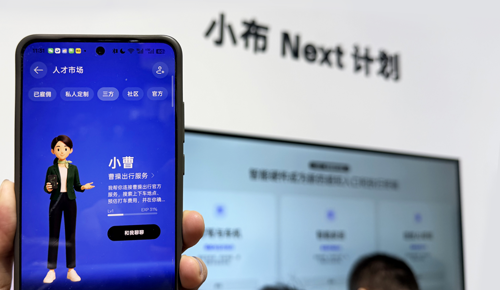
In "Breeno Next," OPPO's next-generation on-device AI agent currently in beta testing, users can search for CaoCao's AI agent "Xiao Cao" and talk to it naturally to state their ride needs. An interactive interface card then appears, allowing users to compare fares across vehicle types, book a ride with one tap and track their trip — all without switching to an app.
In AI ride-hailing, maps, pickup and drop-off points and routes inherently rely on users' visual decision-making. In this collaboration, CaoCao upgraded caocao-mcp, its unified standard protocol that enables AI agents to invoke CaoCao services, making its AI ride-hailing service the first in Breeno Next to support UI interaction.
For agents with different capabilities, caocao-mcp adopts a three-tier progressive interaction mechanism: agents without any rendering capability interact with users through fully structured, readable text; agents capable of loading web pages receive ready-to-use interactive pages; and agents with UI extension capabilities receive sandbox cards that enable direct in-card booking. One set of capabilities, three interaction formats — making interactions between agents and users more convenient.
This update to the interaction paradigm marks CaoCao's latest exploration of real-world AI agent transaction scenarios, and also provides a reference for service providers in food delivery, travel and hospitality, and e-commerce seeking to launch on AI agents.
Currently, CaoCao has built scalable, systematic capabilities in fleet dispatching, asset management, user services and compliance operations, enabling efficient connections between AI agents and mobility resources on its platform. Going forward, the company will continue to upgrade its AI mobility service capabilities, expand collaboration with AI hardware manufacturers, and explore new models of ecosystem collaboration in the agent era.